Pages

Friday, December 13, 2013

Juknokwon(bamboo garden )& Metasequoia-lined Road in Damyang

Juknokwon in Hyanggyo-ri is famous for its bamboo forest bath. It is situated just left to the hyanggyo (Confucian school) beside Gwanbangjerim Riverside Park and Damyang stream, the basin of Youngsan River.
As you take each step towards the bamboo garden, your body will be relaxed and your mind will be refreshed by the cool wind blowing between the bamboos. Listen to the rustling bamboo leaves as you stroll along, and receive the sunlight that passes through the green leaves. Jukro tea leaves grow by the falling drops of dew in the bamboo garden.
Take a sip of the Jukro tea and lift your head towards the sky while enjoying the forest bath. You will savor the scent of bamboos that makes you calm and peaceful
  • Address
  • 282 Hyanggyo-ri, Damyang-eup, Damyang-gun, Jeollanam-do 


The metasequoia trees were first planted along the road in the early 1970s when the Ministry of Home Affairs designated this road as a part of the national boulevard project. The saplings that were three to four years old have grown so big and tall that they even block the sky. The Korea Forest Service and Forest for Life selected the Metasequoia-lined Road as the Korea’s most beautiful road in 2002.

If you follow National Road No. 15 up from the Korea Bamboo Museum, you will be mesmerized by a beautiful boulevard that looks like it came straight out of a fairytale. The metasequoia trees along with the bamboo grove add to the exotic and mind-blowing scenery. They look like fairies or toy trains when seen from a distance, but like the Queen’s guards at Buckingham Palace when you are at the boulevard.
  • Address
  • 578-4 Hakdong-ri, Damyang-eup, Damyang-gun, Jeollanam-do 

Jeonju Hanok Village

Jeonju Hanok Village has 700 traditional Korean houses, Hanok that are still home to residents today. Hanok Village is the best-preserved living traditional village. It is one of the most popular tourist attractions in Korea. Jeonju also hosted the FIFA World Cup 2002, which saw grand scale refurbishments to many areas in Jeonju for World Cup visitors.

Many traditional and historic sites are excellently preserved in Jeonju such as Gyeonggi Palace, Jeondong Catholic Church, Pungnam-dong, Omokdae, Hyanggyo, Gwonhwon Fortress ruins, Namgo Fortress and many others historic sites. There are also traditional culture learning centers such as art crafts exhibition halls, master products exhibition centers, Hanok Living Experience centers, traditional alcohol museum, Hanji centers, and herbal medicine experience centers. People can also participate in learning about and making traditional art crafts such as Hapjukseon or Taegukseon (fans) along with trying out the traditional tea shops and restaurants. Jeonju offers visitors much to see, do and eat.

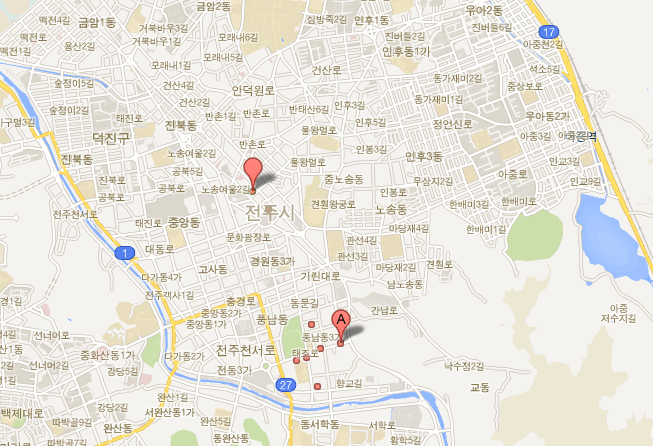
<Google map>

Monday, December 9, 2013

Odongdo Island in Yeosu

                            <Extracted by Yeosu city hall page>

It only takes 10 minutes from downtown. Walking along the breakwater for 15 minutes, you can get to the island. As the artists of Yeosu Branch of Korean Fine Art Association had been working on the mural, the road was selected as one of the 100 Most Beautiful Roads in Korea. The island is also a part of the Hallyeohaesang National Park.

                                              <Extracted by Google>

When it comes to camellia flowers, Odongdo Island in Yeosu is the first place to go. Over 3,000 camellia trees starts to bloom in January and the flowers fully blossom in March. You can overlook Odongdo Island from the Jasan Park on a hill, where people start tours around the western part of the city.

Hahoe village in Andong

listed by UNESCO as a World Heritage site.


The Hahoe Folk Village is a traditional village from the Joseon Dynasty. The village is a valuable part of Korean culture because it preserves Joseon period-style architecture, folk traditions, valuable books, and old tradition of clan-based villages.


 The reason for the village name Hahoe(Ha means a river and Hoe means turning around) was that the Nakdong River flows around the village in an S shape.
                                      Extracted by Google image

Hahoe Village has conserved Hahoe Byeolsingut Mask Dance Play performed by the public in general, and Seonyujulbul Nori-a boat ride and fire paly enjoyed by the nobility called Yangban. The village conserves many cultural heritages which show Korean traditional living cultures and ancient architectual styles.

                                        Extracted by Google image